
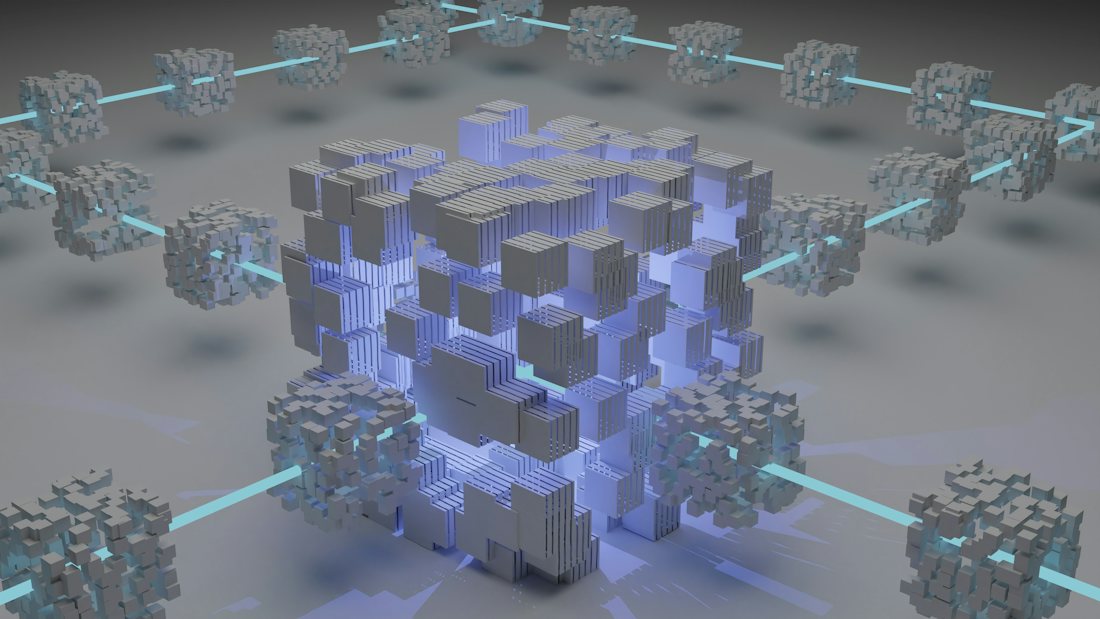
A blockchain is a list that nobody is allowed to quietly edit. Here is how that is arranged, in plain terms.
Blocks and linking
Transactions are gathered into a block. Each block contains a fingerprint of the block before it. Change anything in an old block — a payment, a date — and its fingerprint changes, which breaks the link to every block that follows. Altering history means redoing all the work that came after it.
Many copies, one truth
Thousands of separate computers hold their own copy of that list. None of them is in charge. When a new block appears, every computer checks it against the rules it already knows. If a majority agrees, the block is added. If not, it is thrown away.
This is why a crypto network can run without a company in the middle, and why nobody can quietly reverse your payment.
What it costs, and what it buys
Those thousands of computers compete to be the one that writes the next block. That work is the "mining", and the reward is the reason the system runs. It also means every transaction costs something, and some networks are slower than a database for the same reason a notarised document is slower than a signed one.
Layer 2: doing the same thing cheaper
Networks built to carry a lot of transactions hit that cost, so a second layer is built on top to handle small transactions cheaply and settle in batches. That is the subject of our guide to layer 2 scaling.
Why this matters to you as a depositor: the record of what you are owed is held by many independent computers rather than by one company. That removes one kind of risk — the operator simply editing a balance — and does nothing about the market risk that the price is what it is.
Reading next
With the mechanism understood, how smart contracts are audited is the natural next piece: it explains who checks the code that actually moves the money.